
How to remove paint from concrete
Using a degreaser or soap and water, scrub well to remove the top layer of dirt, dust, or general debris. This means the paint stripper formula can work directly onto the desired surface. Then apply the paint remover liberally and give time for the formula to work, but don’t allow it to fully dry, 15 minutes should be enough.

Removing paint from concrete needn’t be a difficult task. Whether you’re cleaning up a paint spillage, removing old paint so you can go for a new colour, or stripping a concrete surface back to its natural state, this guide will take you through how to remove different types of paint from concrete effectively and easily, without damaging the surface.
Removing paint from concrete without chemicals
If you’re looking to remove paint from concrete without chemicals, pressure washing can be tried as an alternative. If you don’t have a pressure washer, other known natural methods such as vinegar and baking soda might not work depending on the severity, and so may result in more money being spent trying different processes. It’s also not worth forking out on a pressure washer if you don’t already own one just to remove paint as there’s no guarantee it’ll work.
Bear in mind these methods won’t be as effective and will also require more elbow grease, so we recommend using Jenolite industrial strength paint stripper as it won’t harm your concrete surface and is made specifically for the job.
How to remove spray paint from concrete
Have you been the victim of a spray-painted wall? Spray paint can prove very difficult to remove, as its natural quick-drying nature means layers upon layers of paint can easily accumulate. Not only does it set quickly, but it can saturate inside all the cracks and holes in the concrete.
This is why it’s ideal to use a paint stripper that comes in aerosol form just like its enemy so it can cover all the affected areas evenly. Using the Jenolite paint remover spray is perfect for the job as it clings to vertical surfaces, making it a highly effective treatment for removing paint from walls. Simply spray on 15-20cm away and wait 15 minutes for it to work, remove with a scorer or hard brush to get inside all of the holes and crevices. Repeat if necessary.
How to remove masonry paint from concrete
Thinking of repainting your wall, or is your concrete floor looking a bit worn and dated? Old paint can become cracked and stained, and removing it can allow for a new fresh colour to be applied, or left bare.
Using a degreaser or soap and water, scrub well to remove the top layer of dirt, dust, or general debris. This means the paint stripper formula can work directly onto the desired surface. Then apply the paint remover liberally and give time for the formula to work, but don’t allow it to fully dry, 15 minutes should be enough.
Once it’s had time to penetrate, you can scrub the concrete clean with a hard brush. If you find the first application hasn’t quite done the job you can repeat the process to get all the remaining stubborn bits.
Following the steps above will help you remove paint with ease. However, another important thing to remember is to store the aerosol correctly after use, ensuring you can use it time and time again. It’s best kept in a cool, well-ventilated area out of direct sunlight and invert the can after use and spray for 2 seconds to prevent blockages.
Discover the Best Paint Remover in the UK
Industrial Strength Paint Stripper/Paint Remover Aerosol | 400ml

Industrial Strength Paint Stripper/Paint Remover Aerosol | 400ml
DESCRIPTION
-
PAINT STRIPPER & VARNISH REMOVER: JENOLITE Industrial Strength Paint Stripper aerosol spray delivers a high-performance formula designed for rapid removal of paint and stubborn coatings. Ideal for metal, wood, brick and concrete, it also functions as an effective varnish remover for tough surface residues.
-
INDUSTRIAL STRENGTH: Its powerful composition starts working immediately, stripping paint from most materials with speed and efficiency. Strong enough to tackle paints, varnishes, lacquers, adhesives, graffiti and gasket cement, it handles demanding jobs with ease.
-
MULTI-SURFACE: Whether used as a paint stripper for metal or a varnish remover for wood, this versatile product covers a broad range of applications. It works well as a tile paint remover and on brick or concrete surfaces (not suitable for plastic/UPVC). Additional uses include clearing gasket and adhesive residues from cylinder heads, crankcases, gearboxes and water pumps, plus carbon deposits on valve seats, cylinder heads and other metal engine parts.
-
NON-DRIP GEL FORMULA: This paint remover for wood, metal and similar surfaces features a non-drip gel consistency that allows clean, controlled application. It adheres firmly to vertical areas for thorough and effective stripping.
-
FAST ACTING: The advanced formula begins working quickly. Supplied in an aerosol can for convenient spray application, it reaches into tight spots and is widely regarded as one of the best paint removers for wood, metal and other surfaces. Not suitable for powder-coated finishes. Multiple applications may be required for heavy or multi-layered paint.
-
EASY TO APPLY: Spray liberally to achieve full coverage on the painted area. Allow 15 minutes of dwell time, then scrape or scrub with a paint scraper or steel wool to lift the coating. Thick layers may need a second treatment. Always use JENOLITE Industrial Strength Paint Stripper aerosol spray in a well-ventilated area while wearing tight-fitting protective goggles and chemical-resistant gloves.
Alloy Wheel Spray Paint | Silver | 400ml
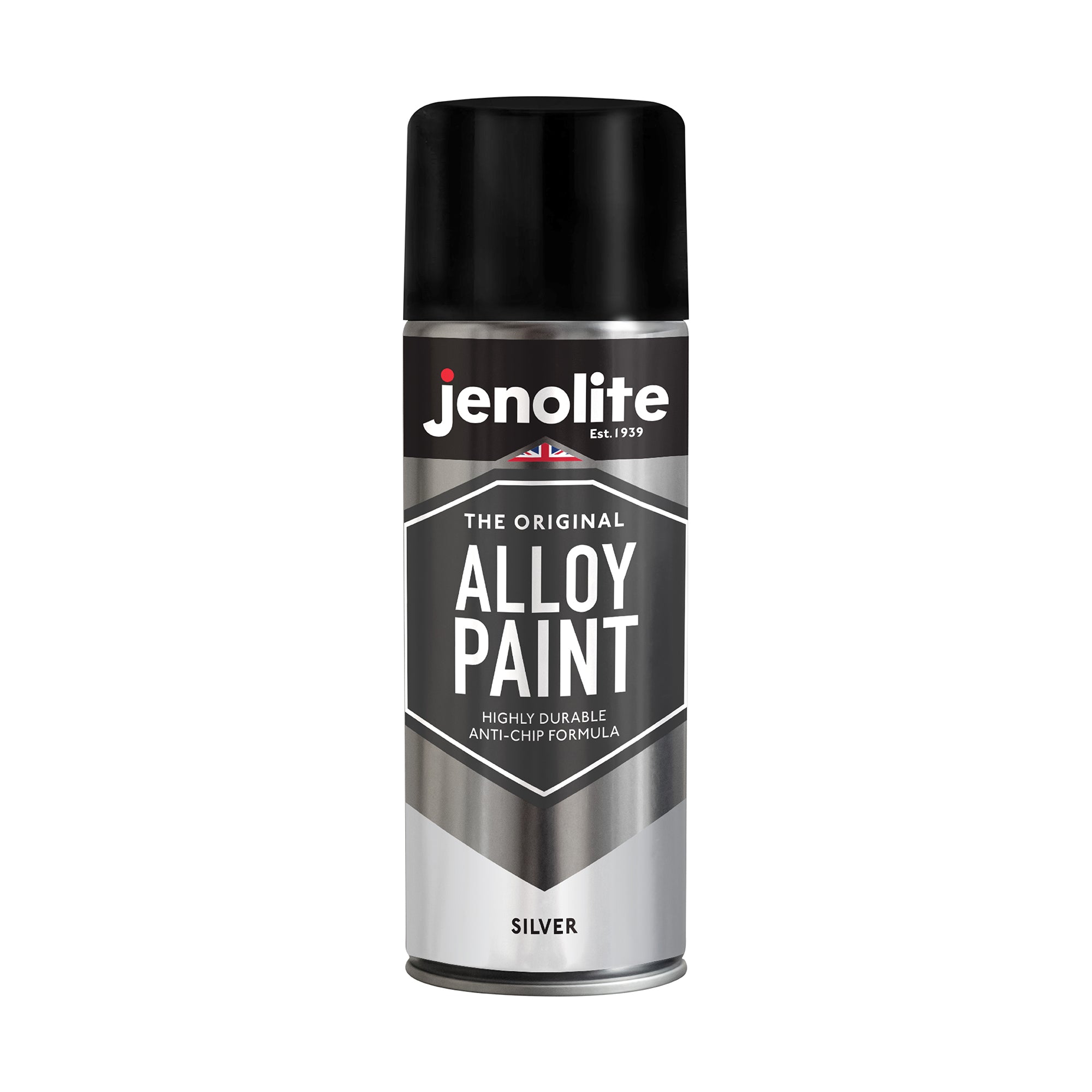
Alloy Wheel Spray Paint | Silver | 400ml
DESCRIPTION
-
RESTORATION & REFURBISHMENT: Revive tired or damaged wheels using JENOLITE premium alloy wheel spray paint. Paired with a quality alloy wheel primer, the silver formula builds a smooth foundation that delivers a clean, professional-looking restoration on alloy rims.
-
CORROSION RESISTANCE: JENOLITE Alloy Wheel Spray Paint forms a tough protective barrier that resists corrosion and stands up to road salt, rain and temperature changes. This durable silver wheel spray paint keeps wheels looking sharp and protected for longer.
-
EASY APPLICATION: The silver alloy wheel spray paint is designed for straightforward spraying. Its smooth-flowing formula allows both DIY users and professionals to achieve consistent coverage and a clean finish with minimal effort.
-
SUPERIOR FINISH: Enjoy a bright, high-gloss silver appearance that transforms dull wheels. Specially developed silver paint spray lays down an even, uniform coat that restores a like-new look without runs or patchiness.
-
MULTI-SURFACE USE: JENOLITE Alloy Wheel Spray Paint bonds strongly to alloy wheels and other metal surfaces. Excellent adhesion makes it a reliable choice for alloy paint projects and general metal refinishing work.
IPA Solvent Cleaner Aerosol | 500ml

IPA Solvent Cleaner Aerosol | 500ml
DESCRIPTION
-
INDUSTRIAL CLEANER: JENOLITE IPA Solvent Cleaner aerosol spray delivers a specialist contact cleaner formulated for safe use on delicate electrical circuits and components. The convenient aerosol delivery reaches tight spaces, helping maintain efficiency and extend the service life of electrical parts.
-
FAST AND EFFECTIVE: This fast-drying cleaner rapidly lifts dust, dirt, grease, grime, flux residue and condensation, leaving surfaces completely residue-free. The pure isopropyl alcohol (IPA) formula is ideal for electronics, automotive and industrial cleaning tasks.
-
SAFE FOR ELECTRONICS: Non-conductive and electronics-safe, the cleaner can be applied directly to sensitive circuitry without risk of damage.
-
IMPROVES PERFORMANCE: By thoroughly removing dirt, grease, moisture and flux residues, it restores optimal function to delicate components and boosts overall system reliability.
-
DELICATE ELECTRONIC COMPONENTS: Suitable for circuit boards, sensitive electrical parts, printers, photocopiers, game controllers, joysticks, remote controls, toys, crackling guitar potentiometers, DJ mixer sliders and similar precision equipment.
-
AUTOMOTIVE USES: Perfect for cleaning spark plugs, battery terminals, MAF sensors, electronic fuel injection systems and other vehicle electrical components.
-
REPELS MOISTURE: Beyond cleaning, the formula actively displaces moisture, improving electrical contacts on spark plugs and other components found in cars, motorbikes and vans.
-
PRODUCED IN THE UK
Glue & Tar Remover Aerosol | 500ml

Glue & Tar Remover Aerosol | 500ml
DESCRIPTION
-
REMOVES GLUE & TAR: JENOLITE Glue & Tar Remover is expertly developed to break down and eliminate stubborn sticky residues from vehicle bodywork and household surfaces.
-
SOFTENS AND DISSOLVES: It rapidly softens and dissolves a wide variety of tough deposits including bitumen, tar, grease, tree sap, silicones, insect remains, glue and adhesives.
-
SUITABLE FOR: Safe and effective on paintwork, plastic, metal, glass, trim, tiles and worktops.
-
IDEAL FOR: Maintains car paint, bodywork and glass in top condition by softening road residues so they wipe away easily. Excellent for clearing leftover adhesive from stickers, decals and similar marks.
-
PRODUCED IN THE UK
Discover Also:
-
Rust Shield Clear Metal Lacquer | 400ml | Rust Protection Spray
-
High Temperature Clear Lacquer 500ml | 650C + | Crystal Clear Finish
How to Identify the Type of Paint on Concrete
Knowing the paint type on concrete makes the removal process far more straightforward. Concrete is porous, so paint sinks into the surface quickly. Water-based paints such as latex or acrylic usually sit closer to the top layer. Oil-based paints dig deeper and form a tougher bond.
A simple test helps sort them out. Soak a cotton ball or clean cloth in rubbing alcohol or mineral spirits. Rub it gently across a small painted area. If colour transfers onto the cloth, the paint is water-based. If the cloth stays clean and the paint stays put, it is oil-based.
Water-based paint often responds to milder methods first. Oil-based paint needs a stronger approach. The non-drip gel formula of the industrial strength paint stripper aerosol works across both types on concrete, brick, and similar surfaces. It softens layers so they lift away with a scraper or stiff brush. Always test a small hidden spot first. Different paint coatings react in their own way. Once the type is clear, the right tools and timing become obvious.
Paint Removal for Concrete Surfaces in the UK
British weather and common concrete uses shape how paint removal works here. Driveways, garage floors, patio slabs and external walls face damp, frost and frequent temperature swings. These conditions can make old paint crack or lift at the edges, yet the remaining film still grips the porous surface.
Outdoor jobs benefit from dry spells. Mild, dry days give chemical strippers enough time to work without rain washing them away too soon. Indoor concrete, such as basement or utility floors, needs good ventilation to clear fumes.
UK concrete often carries masonry paint or exterior emulsions designed for weather resistance. These coatings respond well to a gel-style stripper that stays in place on vertical or horizontal surfaces. The paint stripper collection is formulated for multi-surface use, including concrete and brick, making it a practical match for typical British projects.
After removal, the bare concrete is left open to moisture. A clean, dry surface is ready for any later protective coating if needed. Local waste rules apply to used rags and residue, so collect them for proper disposal rather than rinsing everything into drains.
Latest News In 2026
Product ranges for surface preparation continue to expand with practical multi-surface options. Recent additions focus on aerosol product formats that reach into textured concrete and vertical walls without heavy dripping. These updates support faster coverage on both oil-based and water-based coatings while keeping the formula suitable for brick and concrete alike.
Related guidance has appeared on restoring metal components that sit near concrete surfaces. Posts covering chrome paint choices for auto parts and application methods for shiny finishes show how surface preparation links across different materials. The same care used on concrete often applies when metal fixtures or railings need stripping before repainting.
Collection pages for paint removal tools have been refreshed to group aerosols and multi-packs together. This makes it simpler to match the right strength to the job size, whether a small spill or a larger patio area. Ongoing refinements keep the emphasis on cling formulas that stay active long enough for the paint to soften fully.
Frequently Asked Questions
Does the type of concrete affect how paint comes off?
Yes, the density and age of the concrete play a clear role in how easily paint lifts. Newer or denser slabs tend to hold paint nearer the surface, while older, more porous concrete absorbs coatings deeper into its structure. Sealed concrete can slow the penetration of both the original paint and any stripper applied later. Textured outdoor slabs that have weathered over years often need longer contact time for the softener to reach every layer. Matching the method to the surface condition helps avoid unnecessary reapplication.
Can household vinegar remove dried paint from concrete?
Vinegar works mainly on light, fresh water-based residues where the paint has not fully cured into the pores. Once the paints coating has dried hard or multiple layers have built up, the mild acidity rarely breaks the bond completely. Oil-based and masonry paints sit beyond its reach in most cases. A dedicated gel formula, such as the industrial strength paint stripper aerosol reaches deeper and stays active long enough to loosen stubborn films. Household options remain useful only for the mildest spills.
How do I know when the paint stripper has done its job?
The treated paint usually changes appearance as the product works. It may wrinkle, blister or turn soft and dull rather than remaining smooth and hard. At that stage, a scraper or stiff brush lifts the coating away cleanly without heavy force. If the surface still feels firm after the suggested dwell time, a further light coat restores activity. Watching for these visual and textural signs prevents both under-treatment and over-application.
Is it safe to pressure wash concrete after using chemical stripper?
Once the bulk of the softened paint has been scraped or brushed away, a pressure wash can clear remaining residue from the pores. Keeping the nozzle at a steady distance and moving it continuously avoids gouging the surface. Moderate pressure is usually enough for outdoor slabs such as driveways or patios. Indoor floors often respond better to a thorough rinse with clean water and a stiff brush. The final wash leaves the concrete ready for any later sealing or coating.
What happens if paint stripper dries on the concrete?
Dried product loses its ability to keep softening the paint stripper and can leave a sticky or hardened film that is harder to remove. The active ingredients need to stay moist while they break the bond. If drying occurs, a fresh application over the same area usually reactivates the process. Prompt removal of the loosened paint after the working time keeps the surface clear and reduces extra labour. Storing the aerosol correctly after use also helps maintain consistent performance on later jobs.
Can I paint the concrete again straight after stripping?
The surface needs to be free of all residue and fully dry before any new coating goes on. Leftover stripper or paint particles prevent proper adhesion of fresh paint or sealer. A final rinse followed by adequate drying time creates a clean base. Once dry, the concrete accepts primers or protective finishes evenly. This preparation step supports longer-lasting results on both indoor and outdoor areas.
Read also:



