
How to remove paint from alloy wheels

Need to remove old, cracked, and chipped paint? Maybe you’ve invested in a second-hand car with unsightly alloys? Or maybe you’re regretting your newest paint job?
Whatever the reason is, if you’re wanting to remove paint from your alloys then this guide will help you strip your rims back to bare metal without ruining or scratching the surface.
Clean your alloys
Before removing the paint, cleaning your wheel alloys is important as it can get rid of excess grease and grime that will cause a barrier between your alloy surface and the paint stripper, preventing it from working as effectively. Use a degreaser or some soap and water with a sponge to remove any dirt from the surface.
UK-Specific Considerations for Alloy Wheel Paint Removal
British road conditions place extra stress on alloy finishes. Winter salt, frequent rain and temperature swings accelerate the breakdown of old coatings, so thorough preparation becomes even more important. Wheels often carry a combination of original clear coats and later spray applications that react differently to the same remover.
After the paint has been lifted, the UK weather can promote rapid surface oxidation on bare alloy. Applying a protective layer such as rust shield clear metal lacquer soon after rinsing helps guard against this. Motorists who regularly drive coastal or salted routes frequently turn to products within the Motor Care range for ongoing defence of both wheels and surrounding metalwork.
Use a paint stripper
The best way to remove paint from alloys is to use a formula specifically designed to strip paint, rather than natural, home remedies. This is so you know it will do the job successfully without damaging the metal, as well as being simple to use.
Spray the paint remover liberally over the affected area from about 15-20cm away, ensuring a good and even coating is applied. Wait 15 minutes so that the paint softens as it is saturated, then remove with a scraper or similar implement.
Use a small brush such as a toothbrush or scrubbing brush to gain access to specific areas to concentrate on, such as dents, on the inside of the alloy spokes, or around the bolts.
Repeat this process if necessary to remove any remaining stubborn parts. The Jenolite Paint Stripper also has the ability to remove clear coatings on your alloys for repainting.
How to paint your alloy wheels
Once the previous paint has been removed, you may want to repaint them to give your alloy wheels a fresh, new look. If you haven’t already, clean your alloys with soap and water or a degreaser to remove grease, oil, and dirt.
Using Jenolite Alloy Paint, spray in smooth strokes 30cm away to coat with a thin and even layer, then allow the product to cure and dry for 2 hours before over-spraying.
The paint is resistant to corrosion, flaking, and stone chips which makes it a great and durable surface that will not only refurbish your alloys but protect for years to come.
The paint stripper spray can be used on other surfaces such as wood, metal, and concrete. Take a look at our other articles to see how you can remove paint from a range of materials.
Discover the Best Paint Remover in the UK
Industrial Strength Paint Stripper/Paint Remover Aerosol | 400ml

Industrial Strength Paint Stripper/Paint Remover Aerosol | 400ml
DESCRIPTION
-
PAINT STRIPPER & VARNISH REMOVER: JENOLITE Industrial Strength Paint Stripper aerosol spray delivers a high-performance formula designed for rapid removal of paint and stubborn coatings. Ideal for metal, wood, brick and concrete, it also functions as an effective varnish remover for tough surface residues.
-
INDUSTRIAL STRENGTH: Its powerful composition starts working immediately, stripping paint from most materials with speed and efficiency. Strong enough to tackle paints, varnishes, lacquers, adhesives, graffiti and gasket cement, it handles demanding jobs with ease.
-
MULTI-SURFACE: Whether used as a paint stripper for metal or a varnish remover for wood, this versatile product covers a broad range of applications. It works well as a tile paint remover and on brick or concrete surfaces (not suitable for plastic/UPVC). Additional uses include clearing gasket and adhesive residues from cylinder heads, crankcases, gearboxes and water pumps, plus carbon deposits on valve seats, cylinder heads and other metal engine parts.
-
NON-DRIP GEL FORMULA: This paint remover for wood, metal and similar surfaces features a non-drip gel consistency that allows clean, controlled application. It adheres firmly to vertical areas for thorough and effective stripping.
-
FAST ACTING: The advanced formula begins working quickly. Supplied in an aerosol can for convenient spray application, it reaches into tight spots and is widely regarded as one of the best paint removers for wood, metal and other surfaces. Not suitable for powder-coated finishes. Multiple applications may be required for heavy or multi-layered paint.
-
EASY TO APPLY: Spray liberally to achieve full coverage on the painted area. Allow 15 minutes of dwell time, then scrape or scrub with a paint scraper or steel wool to lift the coating. Thick layers may need a second treatment. Always use JENOLITE Industrial Strength Paint Stripper aerosol spray in a well-ventilated area while wearing tight-fitting protective goggles and chemical-resistant gloves.
Alloy Wheel Spray Paint | Silver | 400ml
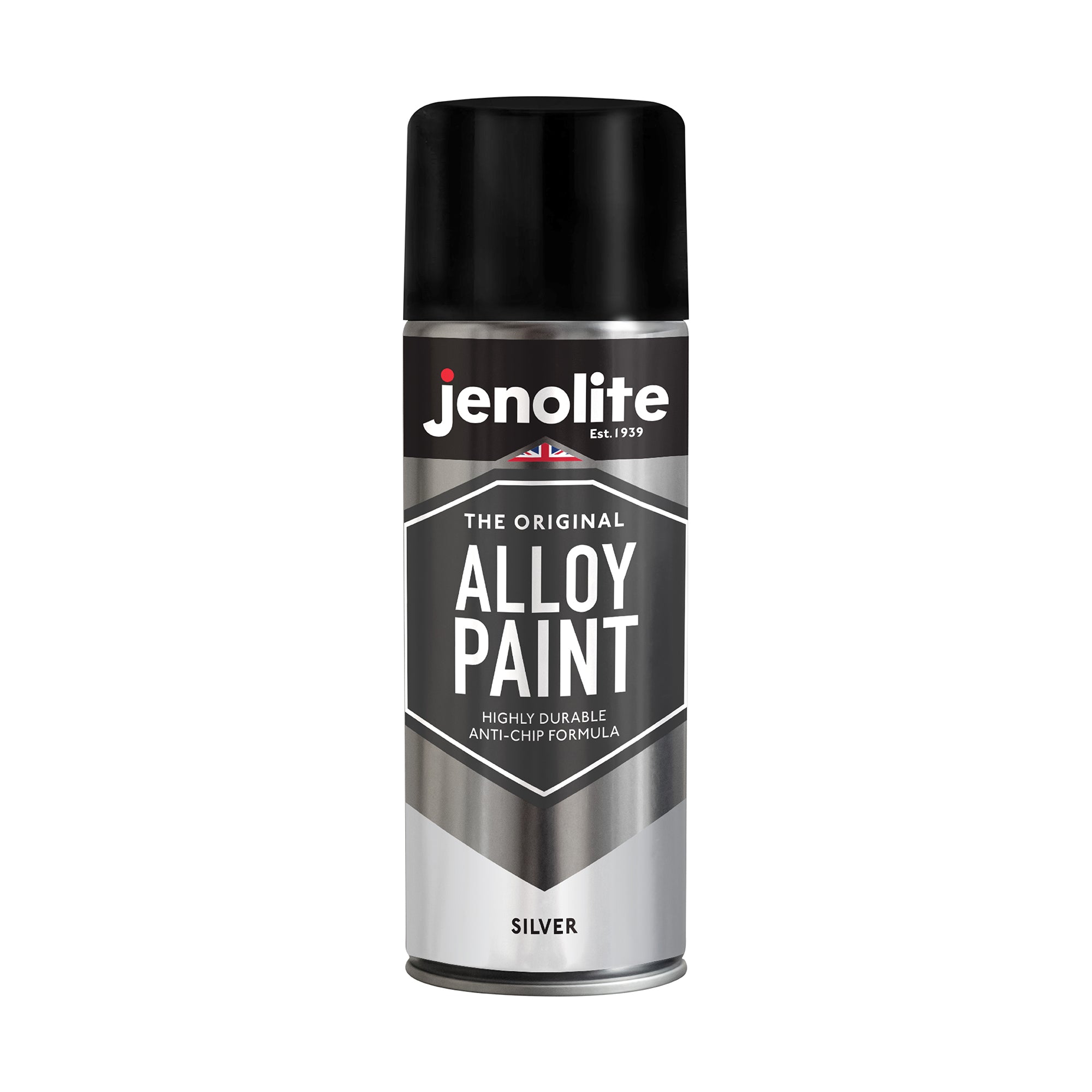
Alloy Wheel Spray Paint | Silver | 400ml
DESCRIPTION
-
RESTORATION & REFURBISHMENT: Revive tired or damaged wheels using JENOLITE premium alloy wheel spray paint. Paired with a quality alloy wheel primer, the silver formula builds a smooth foundation that delivers a clean, professional-looking restoration on alloy rims.
-
CORROSION RESISTANCE: JENOLITE Alloy Wheel Spray Paint forms a tough protective barrier that resists corrosion and stands up to road salt, rain and temperature changes. This durable silver wheel spray paint keeps wheels looking sharp and protected for longer.
-
EASY APPLICATION: The silver alloy wheel spray paint is designed for straightforward spraying. Its smooth-flowing formula allows both DIY users and professionals to achieve consistent coverage and a clean finish with minimal effort.
-
SUPERIOR FINISH: Enjoy a bright, high-gloss silver appearance that transforms dull wheels. Specially developed silver paint spray lays down an even, uniform coat that restores a like-new look without runs or patchiness.
-
MULTI-SURFACE USE: JENOLITE Alloy Wheel Spray Paint bonds strongly to alloy wheels and other metal surfaces. Excellent adhesion makes it a reliable choice for alloy paint projects and general metal refinishing work.
IPA Solvent Cleaner Aerosol | 500ml

IPA Solvent Cleaner Aerosol | 500ml
DESCRIPTION
-
INDUSTRIAL CLEANER: JENOLITE IPA Solvent Cleaner aerosol spray delivers a specialist contact cleaner formulated for safe use on delicate electrical circuits and components. The convenient aerosol delivery reaches tight spaces, helping maintain efficiency and extend the service life of electrical parts.
-
FAST AND EFFECTIVE: This fast-drying cleaner rapidly lifts dust, dirt, grease, grime, flux residue and condensation, leaving surfaces completely residue-free. The pure isopropyl alcohol (IPA) formula is ideal for electronics, automotive and industrial cleaning tasks.
-
SAFE FOR ELECTRONICS: Non-conductive and electronics-safe, the cleaner can be applied directly to sensitive circuitry without risk of damage.
-
IMPROVES PERFORMANCE: By thoroughly removing dirt, grease, moisture and flux residues, it restores optimal function to delicate components and boosts overall system reliability.
-
DELICATE ELECTRONIC COMPONENTS: Suitable for circuit boards, sensitive electrical parts, printers, photocopiers, game controllers, joysticks, remote controls, toys, crackling guitar potentiometers, DJ mixer sliders and similar precision equipment.
-
AUTOMOTIVE USES: Perfect for cleaning spark plugs, battery terminals, MAF sensors, electronic fuel injection systems and other vehicle electrical components.
-
REPELS MOISTURE: Beyond cleaning, the formula actively displaces moisture, improving electrical contacts on spark plugs and other components found in cars, motorbikes and vans.
-
PRODUCED IN THE UK
Glue & Tar Remover Aerosol | 500ml

Glue & Tar Remover Aerosol | 500ml
DESCRIPTION
-
REMOVES GLUE & TAR: JENOLITE Glue & Tar Remover is expertly developed to break down and eliminate stubborn sticky residues from vehicle bodywork and household surfaces.
-
SOFTENS AND DISSOLVES: It rapidly softens and dissolves a wide variety of tough deposits including bitumen, tar, grease, tree sap, silicones, insect remains, glue and adhesives.
-
SUITABLE FOR: Safe and effective on paintwork, plastic, metal, glass, trim, tiles and worktops.
-
IDEAL FOR: Maintains car paint, bodywork and glass in top condition by softening road residues so they wipe away easily. Excellent for clearing leftover adhesive from stickers, decals and similar marks.
-
PRODUCED IN THE UK
Discover Also:
-
Rust Shield Clear Metal Lacquer | 400ml | Rust Protection Spray
-
High Temperature Clear Lacquer 500ml | 650C + | Crystal Clear Finish
Safety Precautions When Removing Paint from Alloy Wheels
Working with paint removal chemicals on alloy wheels demands careful attention to personal protection and the surrounding area. Alloy surfaces respond differently to solvents than steel, so proper gear keeps both the metal and the person handling it safe.
Chemical-resistant gloves made from nitrile or neoprene form the first line of defence. Ordinary household gloves break down quickly. Full-coverage safety goggles shield the eyes from splashes, while a respirator fitted with organic vapour cartridges filters fumes that ordinary dust masks cannot stop. Long sleeves and trousers add another layer of skin protection.
A well-ventilated space is essential. Outdoor work or a garage with doors wide open and a fan running reduces the build-up of vapours. Lay down a chemical-resistant sheet to catch drips and protect the floor or driveway. Keep a bucket of clean water and baking soda nearby. If any product touches the skin, the mixture helps neutralise it before a thorough rinse.
Masking the tyre sidewalls, brake components, and any nearby bodywork prevents accidental contact. Plastic sheeting or bags taped in place create a clean boundary. These simple steps allow the process to proceed without unexpected damage to other parts of the vehicle.
Tools and Materials You’ll Need
Gathering the right items before starting makes the job smoother and protects the soft aluminium of the alloy. A quality degreaser or mild soap solution removes road grime and brake dust that would otherwise block the stripper. Soft nylon brushes and plastic scrapers lift softened paint without gouging the metal. Metal tools and carbon-steel wire brushes risk embedding particles that later cause corrosion.
Microfibre cloths and old rags handle wiping and clean-up. A stiff toothbrush reaches into spoke recesses and around bolt holes. Protective gloves, goggles, and a suitable respirator complete the safety kit already outlined. For rinsing, a hose or pressure washer on a gentle setting clears residue once the paint has lifted.
Where bare metal appears after stripping, a product such as Rust Shield Clear Metal Lacquer can form a temporary barrier against flash rust while further work continues. Many people also keep Waxoil Aerosol Spray on hand for longer-term protection of exposed areas in the wheel well.
Latest News In 2026
Recent coverage has focused on improved finishes for alloy wheels and related automotive metalwork. Guides examining the best alloy spray paint highlight formulations that resist brake dust and road salt while delivering a durable metallic look. Parallel articles on chrome finishes for trim and grilles have appeared, showing how surface preparation remains the foundation of any long-lasting result.
Interest in protective topcoats continues to grow, with clear lacquers and wax-based sprays receiving attention for their ability to seal freshly restored surfaces against the UK climate. These developments reinforce the value of pairing careful paint removal with suitable follow-on protection drawn from established metal treatment ranges.
FAQ
Can paint stripper damage alloy wheels if left on too long?
Extended contact between active stripper and aluminium alloy can lead to surface etching or pitting because the metal is relatively soft compared with steel. Most formulations are designed to lift paint coatings within a set window, after which the chemical action continues on the substrate itself. Rinsing at the correct moment stops the reaction and leaves the surface ready for the next stage. Residual chemicals trapped in spoke recesses or around the bolt circle can also cause delayed problems once a new finish is applied. Checking the product guidance for maximum dwell time helps keep the alloy intact.
Is it necessary to remove the wheels from the car?
Removing the wheels provides unrestricted access to every face of the rim, including the inner barrel and the areas behind the spokes that are difficult to reach when the wheel stays on the vehicle. It also keeps stripper away from brake discs, calipers and suspension components that could be affected by chemical contact. When the wheels remain fitted, thorough masking becomes the only practical safeguard. Either approach can work, yet full removal usually produces a cleaner and more controlled result across complex multi-spoke designs.
What should be used to clean the bare metal after stripping?
A complete rinse with clean water removes the bulk of loosened paint and any remaining chemical residue from the alloy surface. Once the wheel is dry, a final wipe with a clean microfibre cloth clears fine particles that could interfere with adhesion of a new coating. Some owners then apply a thin protective film, such as Rust Shield Clear Metal Lacquer to limit flash rust while the surface waits for primer or alloy wheel spray paint. This intermediate step is especially useful in damp UK conditions where bare aluminium can oxidise quickly.
Does the type of original paint affect the removal process?
Factory-applied clear coats, single-stage enamels and aftermarket spray paints soften at different rates because their binders and film thicknesses vary. Powder-coated finishes often need longer contact or a second application before they release cleanly from the alloy. Multi-layer systems that include etch primers beneath the colour coat can leave stubborn patches in the deeper recesses of the spokes. Observing how the coating reacts during the first application gives a clear indication of whether further treatment is required before the surface is fully prepared.
How soon can new paint be applied after stripping?
New coatings can go on once the alloy is completely dry and free from any chemical residue that might affect adhesion. In practice, this means waiting until the surface feels dry to the touch and shows no remaining moisture in the crevices. Applying primer or alloy wheel spray paint too soon risks trapping moisture or residual stripper that later causes blistering. A short protective layer from the motor care range can bridge the gap if weather or time delays the final finish.
Read also:



